A Gloss and Ritual guide to using plant oils purposefully.

You may have been adding a few drops of eucalyptus oil (eucalyptus globulus) to your shower floor for some time now, turning a simple routine refresh into a luxurious aromatherapy ritual you can enjoy as often as you wish. Of course it smells amazing, but did you know that eucalyptus oil also has health benefits? In a steamy shower, it helps to get rid of chest congestion and clear the sinuses, helping you to breathe deeper and more clearly. What if I I told you that just like eucalyptus in the shower, there’s an essential oil—whether single or a blend—to support each aspect of your entire wellness routine?
We all know and love essential oils for their scent, and aromatherapy—the of use of essential oils to engage the sense of smell for therapeutic benefits—is real. Essential oils, however, have far more valuable properties than just their fragrance.
What Are Essential Oils?
Essential oils are highly concentrated, plant-derived anhydrous—or waterless—extracts. They’re produced by steaming or mechanically pressing parts of the plant like its flowers, bark, leaves, or fruit to isolate the compounds responsible for their aromas. Because of this process, it often takes many pounds of plant material to yield a single bottle. These naturally occurring compounds interact with the body in distinct ways; while some calm the nervous system, others support circulation, or offer antimicrobial or anti-inflammatory properties that can benefit the skin and scalp.
This is a guide to using them thoughtfully.
Shopping for High-Quality Essential Oil
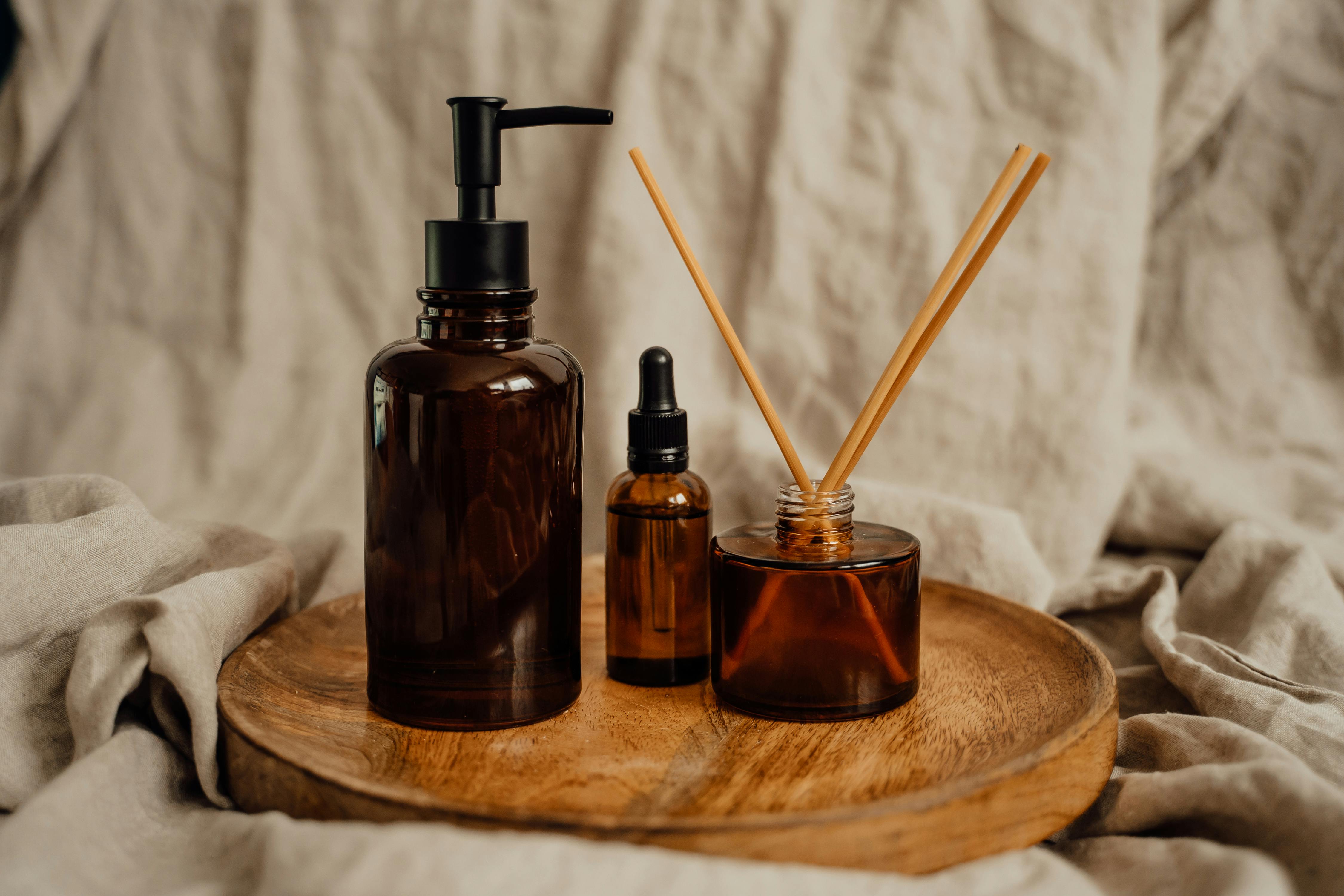
When selecting essential oils, start by taking a look at the label. It should list the plant’s Latin name, details about purity or any added ingredients, and its country of origin. Choose products from established, reputable companies with a track record in aromatherapy. Packaging matters as well; concentrated oils can degrade plastic over time, so high-quality oils are typically stored in dark glass bottles to protect their integrity. When creating your own blends make sure you follow suit, using durable, deep-colored glass dropper bottles, rollerballs, or spray bottles like these to protect the oil from UV rays. Avoid buying anything labeled “fragrance oil,” as these often contains synthetic additives rather than pure plant extracts.
Finally, pay attention to pricing—authentic essential oils vary in cost depending on how they’re sourced and produced, so sometimes it makes sense to shell out a little more. Lemon essential oil (citrus limon), for instance, is commonly inexpensive because it’s made as a high-yield byproduct of the citrus industry. Rose essential oil (rosa damascena, among others), however, is extracted from rose petals , and can require upwards of 10,000 of its blossoms to yield just 5ml of oil. This makes it historically far more expensive than a citrus essential oil. Unusually low prices for typically expensive oils can be a sign of lower quality or dilution.
Quality matters, but so does use. When you use them intentionally and accurately—that is, consistently, and with the required dilution ratio of at least one teaspoon of carrier oil per two drops of essential oil—essential oils can be integrated into your routines in both sensory and substantial ways that support how you rest, move, and care for yourself. We’ll begin with rest.
Restorative Rest
Your evening routine benefits from ingredients that relax your body and support your nervous system’s transition into rest. Certain essential oils contain compounds that have been studied for their calming and sleep-inducing effects, helping to ease tension and prepare the body for sleep.

Key Oils for Rest
- Lavender (Lavandula angustifolia): contains high levels of linalool, a naturally occurring terpenoid alcohol known for its calming effects
- Roman chamomile (chamaemelum nobile): often sold as anthemis nobilis; celebrated for its anxiety-easing properties
- Frankincense (boswellia carterii): yes, the one the Wise Men brought baby Jesus—frequently used to promote relaxation and support a healthy skincare routine (keep reading!)
- Clary sage (salvia sclarea): popular for its calming, balancing and euphoric properties—supports emotional balance
- Sandalwood (santalum spicalum): rich in anti-inflammatory organic compounds and valued for its deep, woody scent, sandalwood relieves stress, promotes restful sleep by grounding the mind and slowing mental activity. Because of its moisturizing and anti-oxidant properties, it is also widely used in skincare
Evening Unwind Blend
- 3 drops lavender
- 2 drops frankincense
- 1 drop clary sage
Diffuse this blend, combine with water for a bedtime pillow spray, or apply the carrier-diluted mixture to pulse points. It supports your nighttime wind-down routine, promoting a gradual shift into rest.
Soft Sleep Oil
- 3 drops Roman chamomile
- 2 drops sandalwood
- 1 drop lavender
Blend with jojoba oil and apply to the chest or temples before bed to help settle the body.
Daytime Alertness and Mental Clarity
Certain essential oils can support cognitive function by stimulating circulation, increasing alertness, and helping reduce mental fatigue. These effects come from their active compounds, not just their bright and cheery scent.

Key Oils for Clarity
- Lemon (citrus limon): contains limonene, associated with improved mood and alertness
- Peppermint (menthe piperita): menthol can stimulate and increase focus
- Rosemary (rosmarinus officianalis): linked to memory and cognitive performance
- Eucalyptus (eucalyptus globulus): supports clear breathing and oxygen flow
- Bergamot (citrus bergamia): uptlifts while maintaining balance
Clear Focus Blend
- 3 drops rosemary
- 2 drops lemon
- 1 drop peppermint
Use in a diffuser or personal inhaler during focused work.
Bright Start Blend
- 3 drops bergamot
- 2 drops eucalyptus
- 1 drop lemon
Inhale or diffuse as part of your morning routine to support alertness without overstimulation.
Glowing Skin
Essential oils can support the skin through their antibacterial, anti-inflammatory, and regenerative properties. When properly diluted, they can help balance oil production, calm irritation, and support overall skin function.

Key Oils for Skin
- Tea tree (melaleuca alternifolia): antimicrobial, supports acneic and blemish-prone skin
- Geranium (pelargonium graveolens): helps balance sebum and skin tone
- Rose (rose damascena): supports hydration and skin barrier health
- Frankincense (boswellia carterii): associated with skin renewal
- Lavender (lavandula angustifolia): calms the skin and supports wound healing
Always dilute essential oils in a carrier oil to protect the skin barrier.
Balanced Glow Serum
- 2 drops geranium
- 2 drops frankincense
- 1 drop lavender
Clarifying Spot Treatment
- 1 drop tea tree
- 1 drop lavender
- 1 teaspoon sweet almond oil
Use sparingly to target congestion without disrupting the skin.
Healthy Hair and Scalp Care
The scalp is an extension of the skin. It benefits from consistent care and from ingredients that support circulation, balance oil production, and maintain a healthy environment for hair growth.

Key Oils for Hair
- Rosemary (rosmarinus officianalis) : proven to increase hair growth
- Peppermint (menthe piperita) : stimulates and refreshes the scalp
- Cedarwood (juniperis virginana) : supports oil balance, reduces hair loss and promotes hair growth by stimulating blood flow in the scalp
- Lavender (lavandula angustifolia): stimulates growth, calms itchy scalp conditions, and strengthens hair follicles
- Ylang-ylang (cananga odorata): balances oil production, increases overall scalp health, and supports the hair’s softness and elasticity
Scalp Renewal Oil
- 3 drops rosemary
- 2 drops peppermint
- 1 tablespoon jojoba or castor oil
Massage into the scalp before washing to support circulation and scalp health.
Softness and Shine Blend
- 3 drops ylang-ylang
- 2 drops lavender
- 1 tablespoon sweet almond oil
For a pre-wash hot oil treatment, combine and heat in a double boiler, apply to damp hair and cover with a plastic cap. Leave on for up to an hour or up tp 20 minutes under heat. After styling, apply lightly to the length of the hair and brush through.
A Closing Note
Though you may be tempted to forgo the dilution recommendation (read: warning), essential oils are potent. When using them, consistency and accuracy are the most important thing to consider, not how much you can use at once or how often you can use them. As you continue use, pay attention to how your body responds. Over time, adding the oils to your regimen becomes less of an extra step and more of a steady layer to your routine, supporting how you rest, how you focus, and how you care for your skin and hair.
Interested in more ways to add oils to your beauty regimen? Explore this post on seven oils that’ll turn your mane up a notch.
If you’re building a routine that feels steady, considered, and your own, stay with me. Subscribe to receive new posts, quiet insights, and product education you can return to.
Leave a Reply